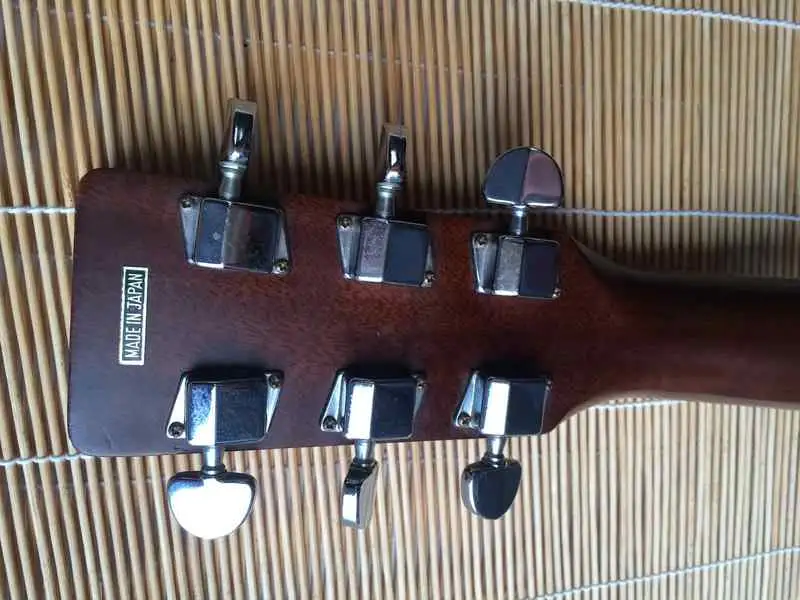
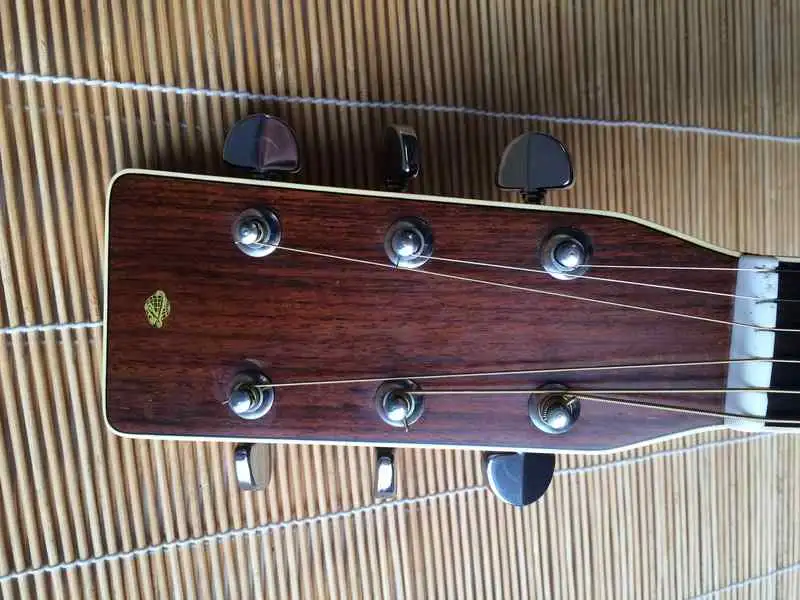
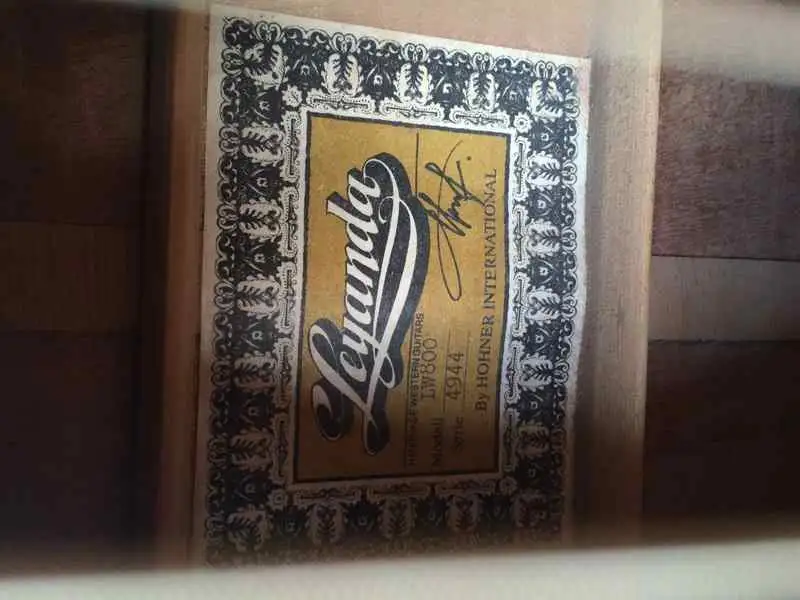
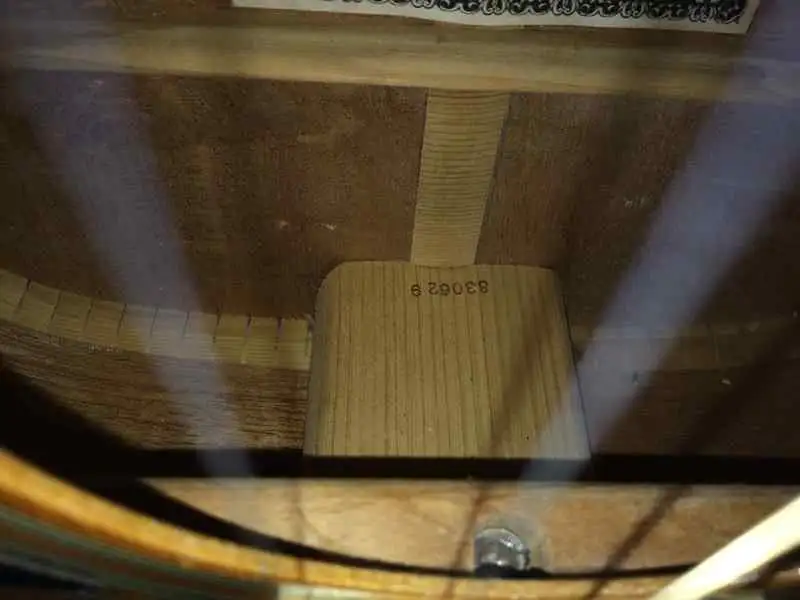
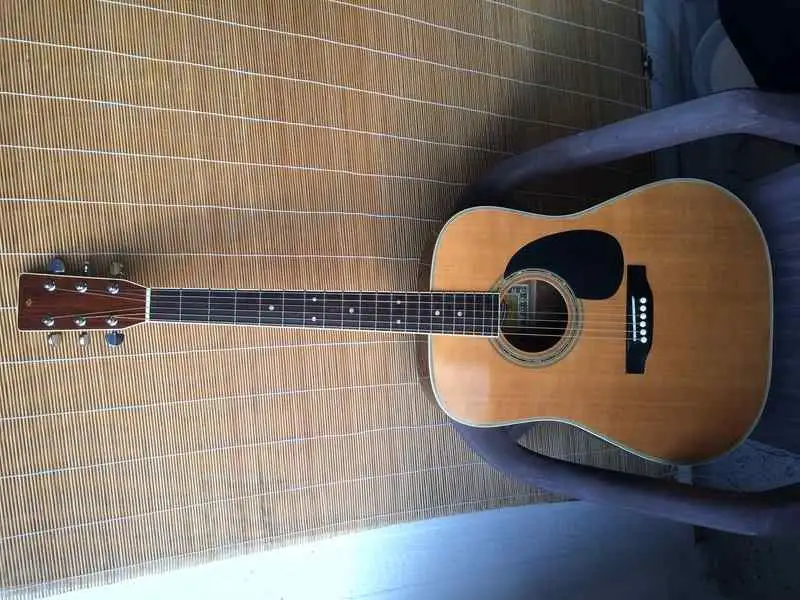
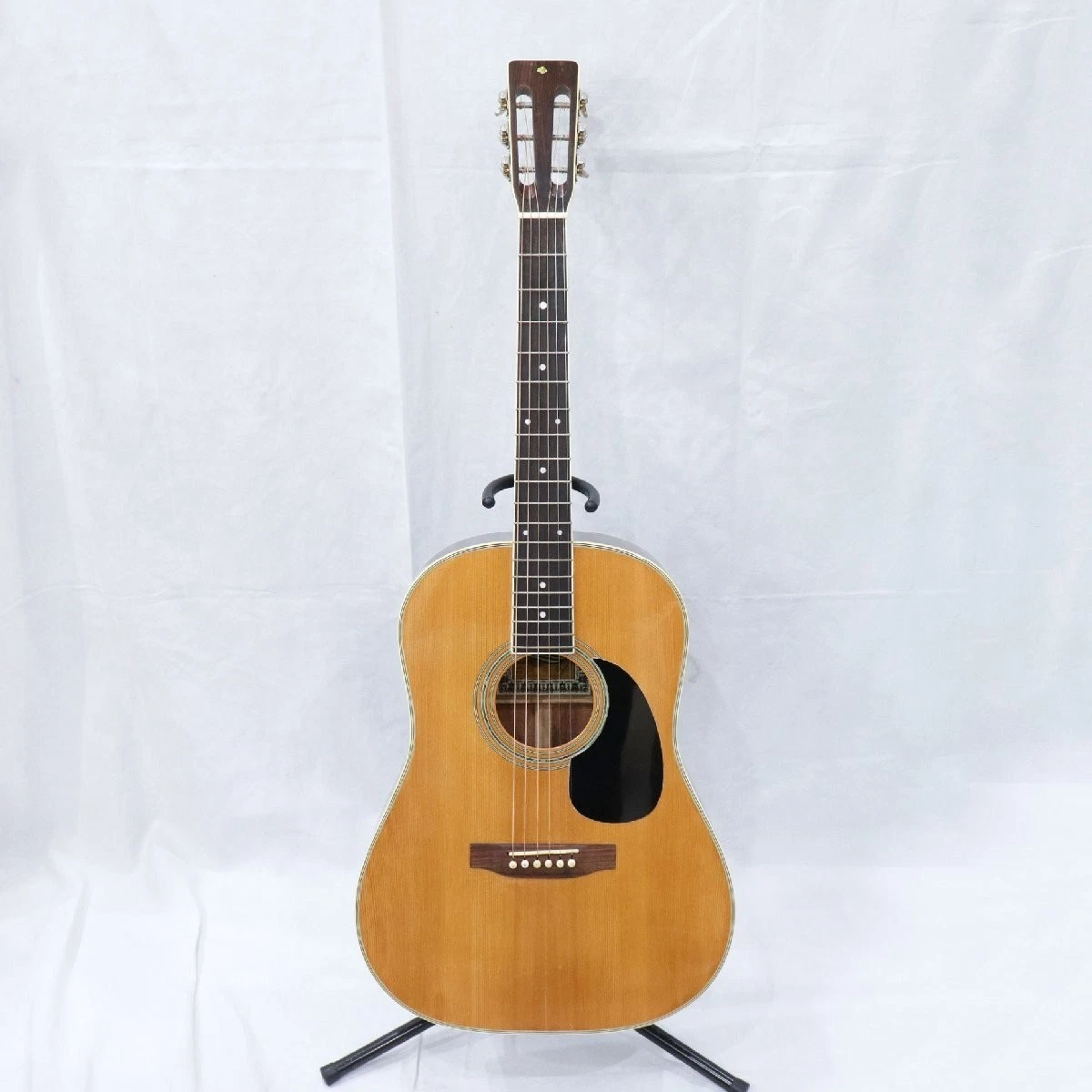
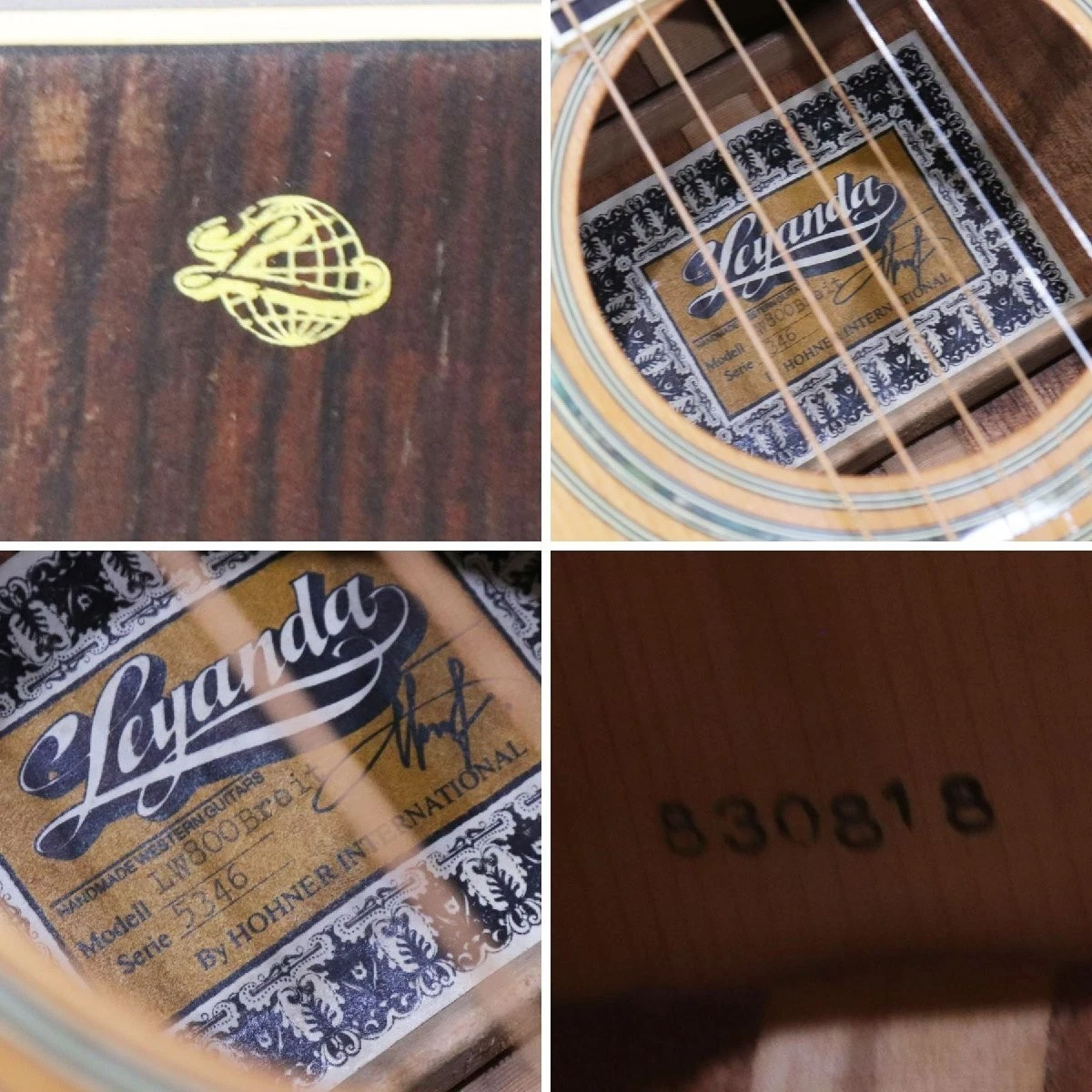
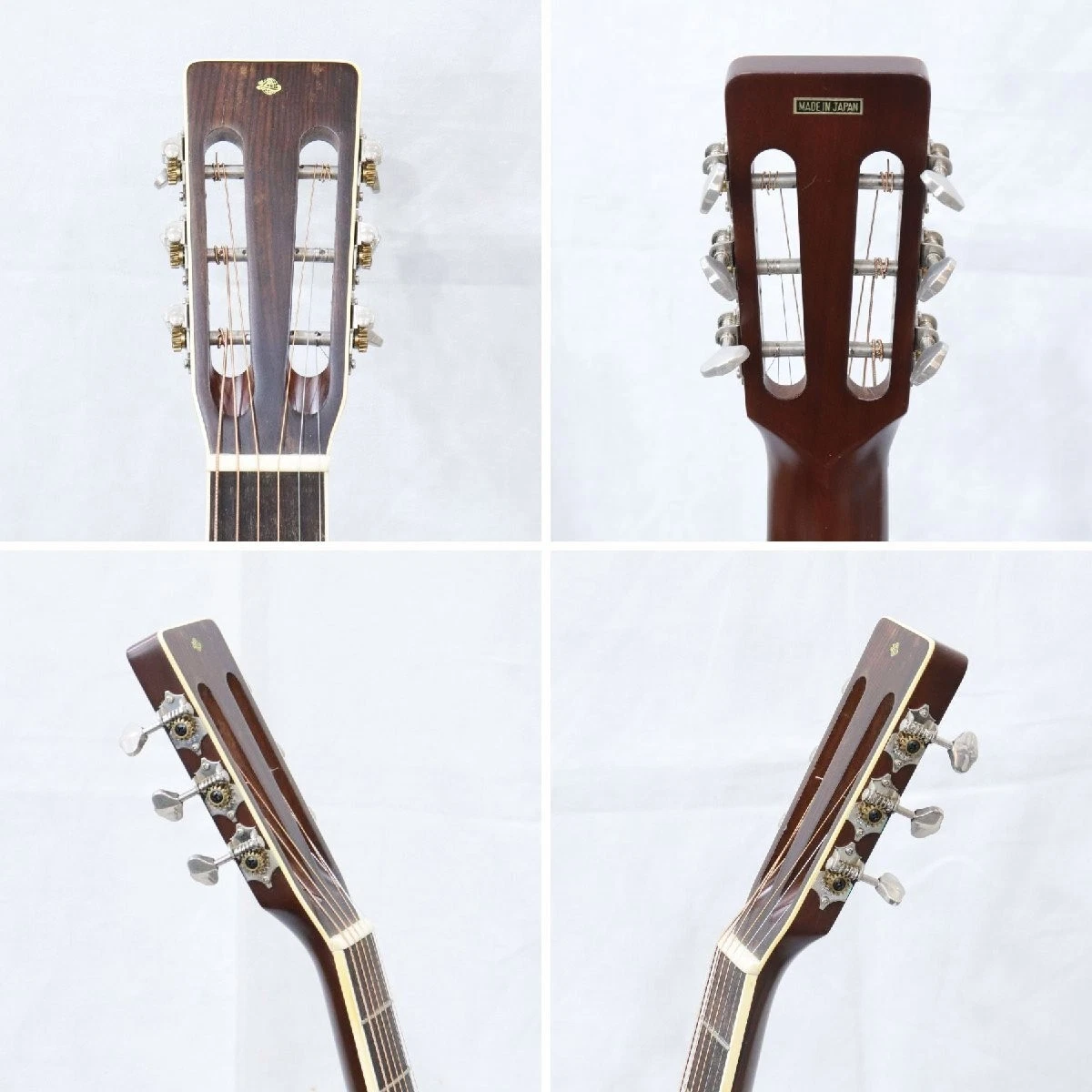
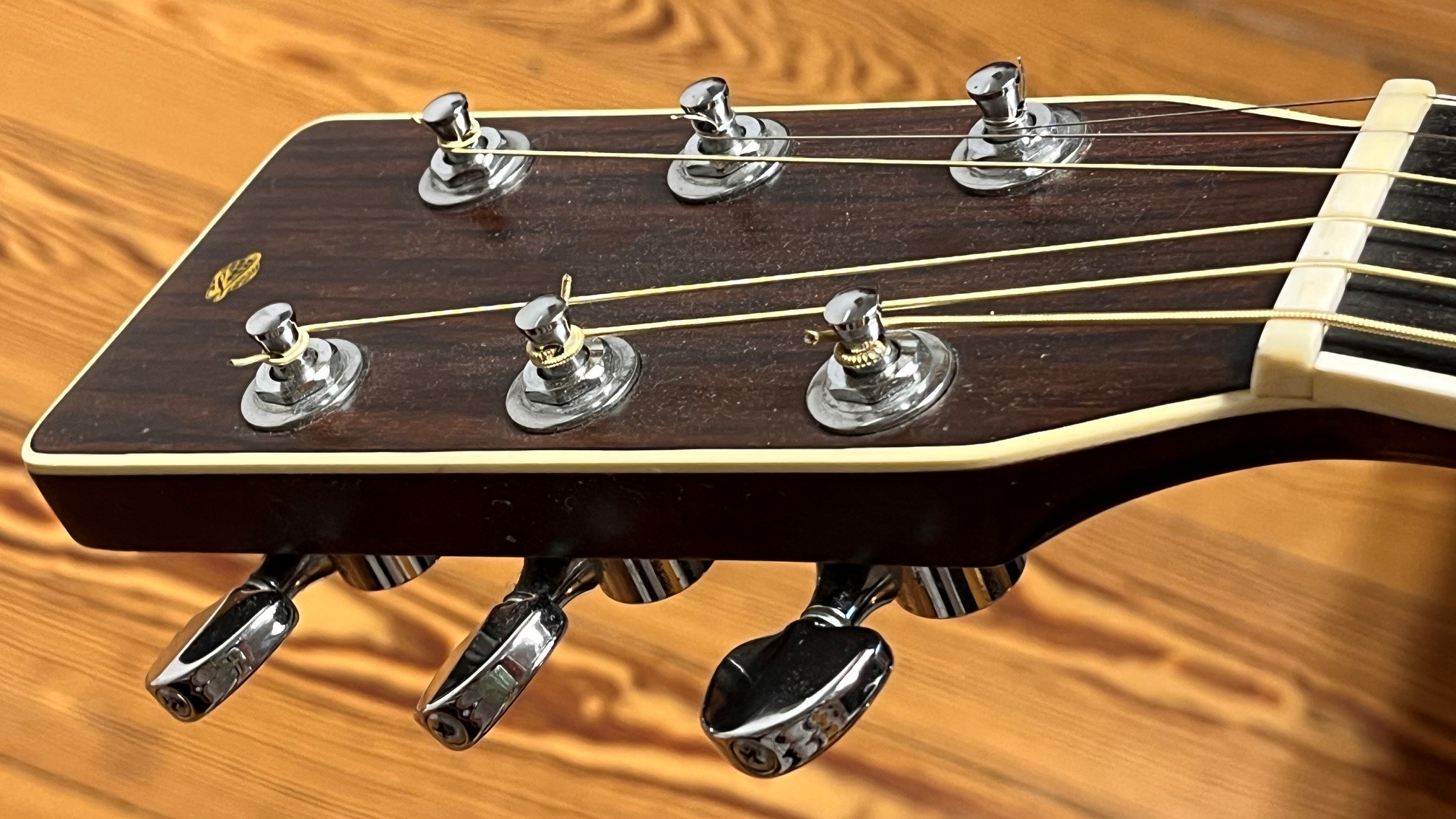
Kiso Suzuki is the tuners and Made In Japan sticker. Yamaki is mainly the headstock. Yamaki is maybe a more interesting candidate because the headstock is fundamental whereas tuners and stickers are bolt on.
I’ll post pictures of a couple of other Japanese Leyandas to give you more to go on, assuming they were all made by the same factory.
Many thanks again for posting the photos of your LW800 – they have been extremely helpful.
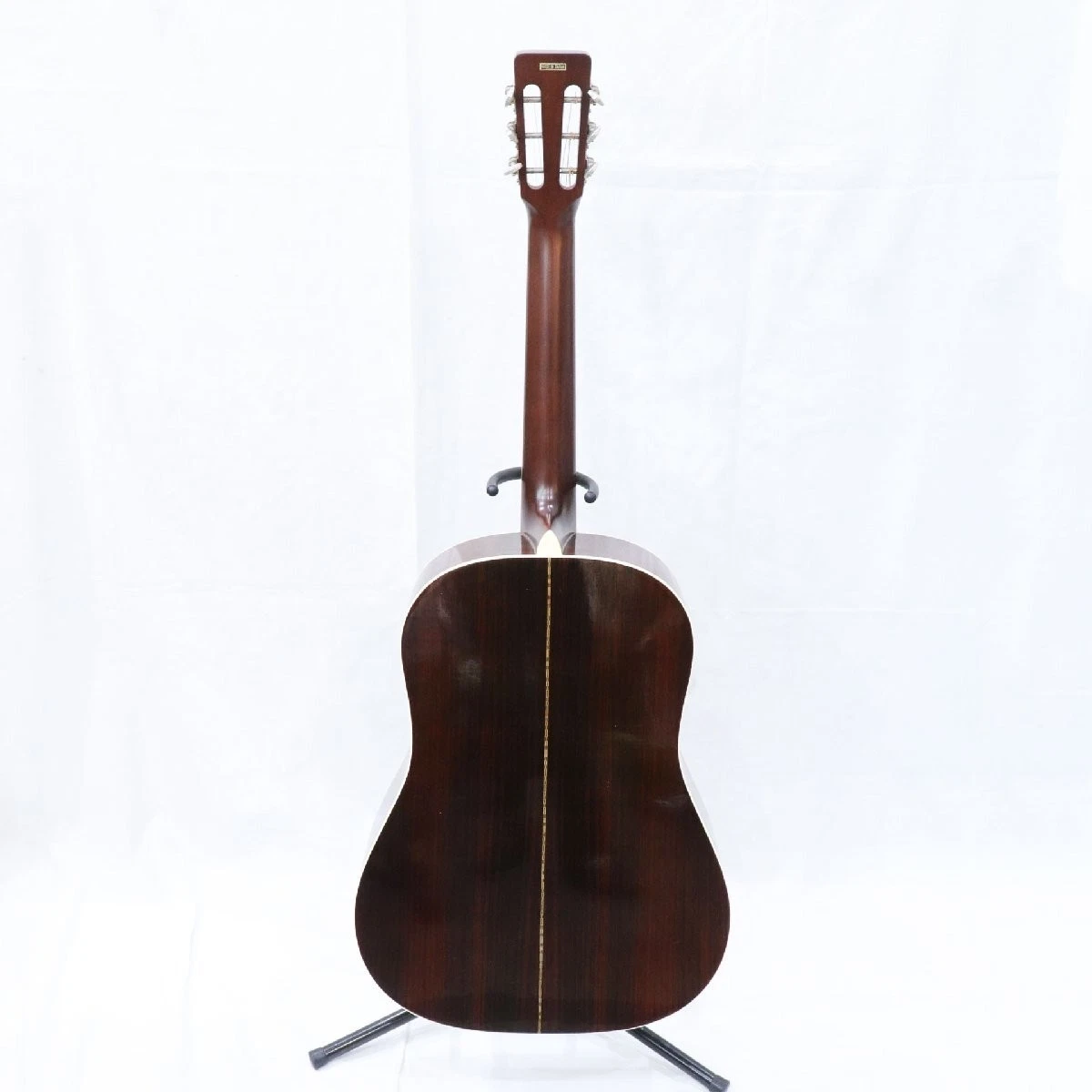
After comparing your LW800 with my LW1100 in more detail, I noticed several similarities:
the bound rosewood veneer headstock,
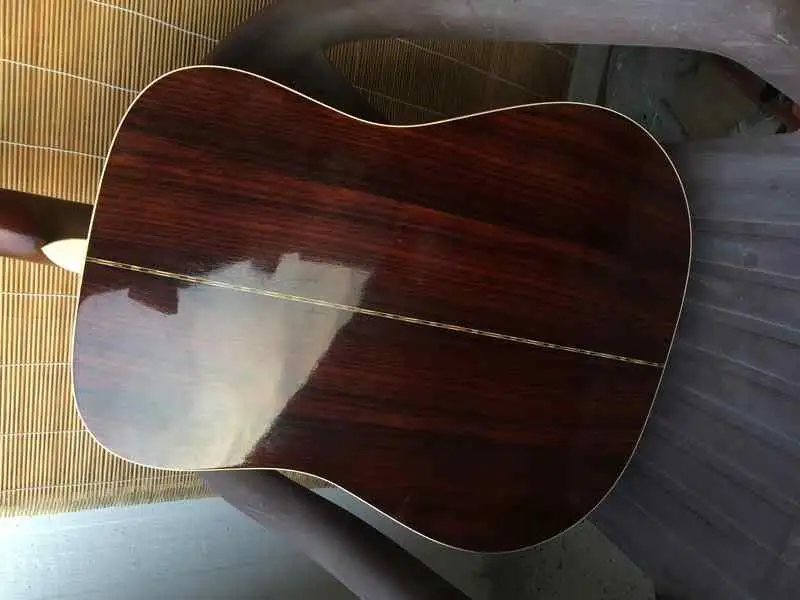
the dark violin-shade finish,
the “Made in Japan” sticker,
very similar tuners,
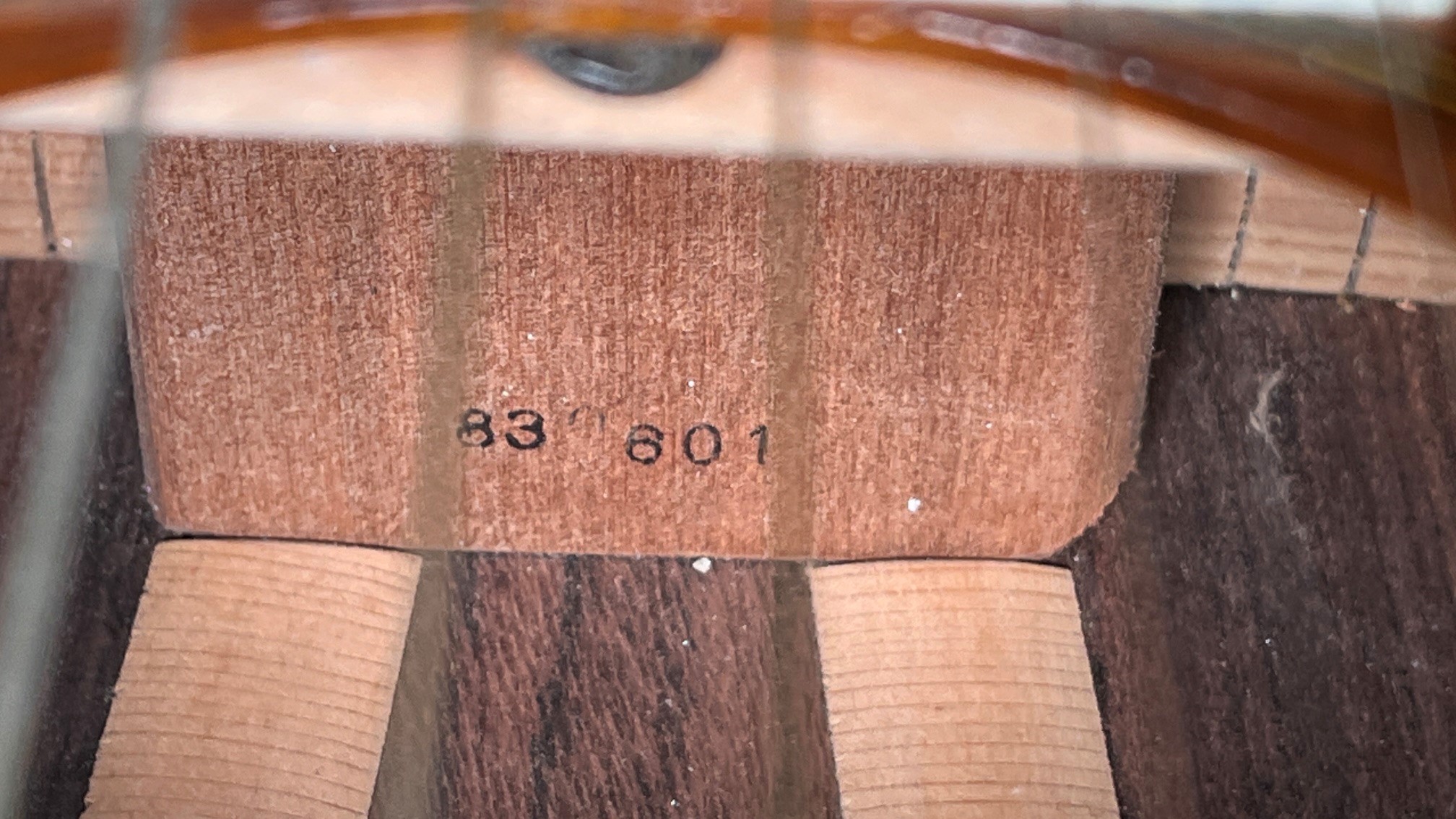
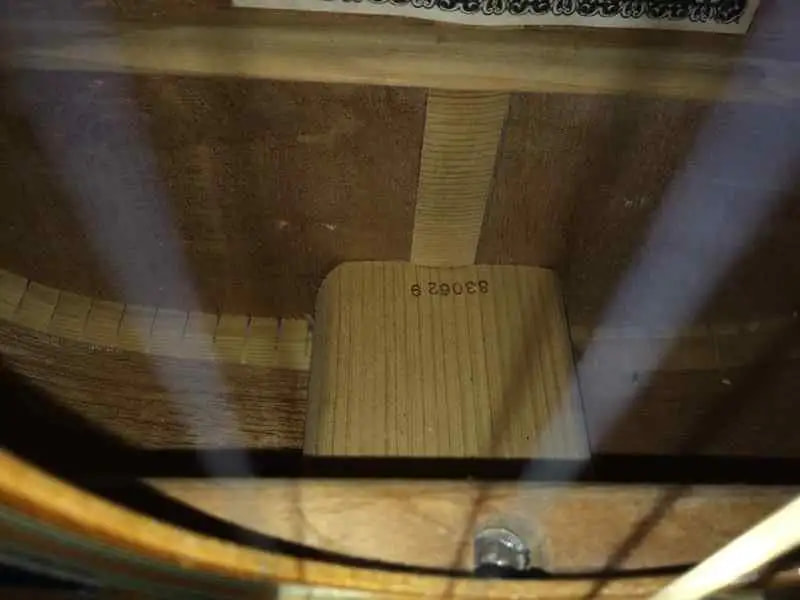
and what appears to be the same style of neck block.
One thing has made me rethink my serial number.
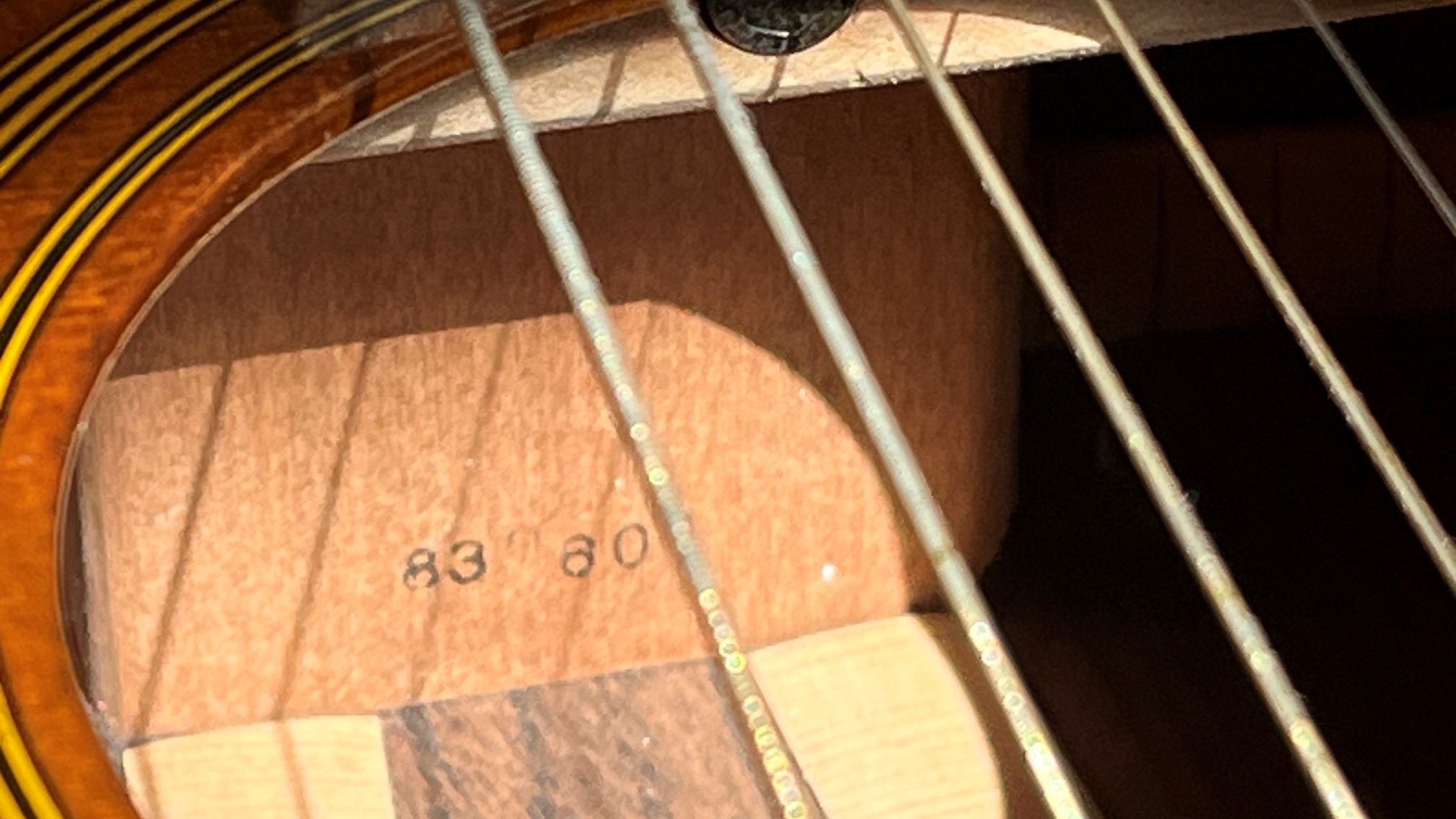
Originally I read it as 83 601, assuming there was an intentional blank space after “83”. However, after looking at it again under different lighting and comparing it with your LW800 (830629), I now wonder whether it could actually read 830601, with the “0” only very weakly inked or only lightly impressed into the wood.
Your LW800 also seems to have slightly uneven spacing and alignment of the digits, suggesting the numbers may have been hand-set rather than stamped as one complete number.
Would you mind having a look at the attached photos?
My main questions are:
Does my serial number look more like 830601 or 83 601 to you?
Do you think the neck block shape is significant? I noticed that both your LW800 and mine have the same chamfered lower corners.
Does this strengthen the case that both guitars came from the same factory?
And finally: if you had to choose today, would you lean more towards Yamaki, Kiso Suzuki, or another Japanese factory?
I’m very interested in your opinion because your experience with Japanese Hohner guitars is much broader than mine.
I also noticed that several Yamaki guitars (YW-30, YW-50 and AY-series examples) seem to have a very similar chamfered neck block, although I’m not sure whether this feature is really factory-specific or was shared by several makers.
I’ve been thinking about your comment regarding “fundamental woodwork versus bolt-on parts.”
The more I compare the three Japanese Leyandas that have surfaced (LW1100, LW800 and the wide-neck slotted-headstock model), the more I wonder whether Hohner or Moridaira might have sourced different models from more than one Japanese factory while intentionally keeping the external styling (headstock shape, globe logo, Made in Japan sticker) consistent.
That would explain why some construction details seem closer to Yamaki, while other features resemble Kiso Suzuki or Terada.
Do you think such a mixed sourcing strategy is plausible, or do you still think it’s more likely that one single factory built the whole Japanese Leyanda range?
I did say upfront that there was a ghost 0 in your neck block number. Also, the guitars are mine and there are two distinct ones - an LW800 and an LW800 Breit.
Moridaira (on behalf of Hohner) absolutely used multiple factories to make the same guitar. But that was generally over a long run of guitars. In the case of the Leyandas which seem to be a short run, it’s more likely each model was made in one factory. And the similarity in neck block stamps suggests that in this case all the models were made in on factory.
Thank you again for all your help. I think we have now reached the point where it’s very likely that the Japanese Leyanda models (LW1100, LW800 and LW800 Breit) were all built in the same factory, as you suggested.
If you had to make your best judgement today, which factory would you consider the most likely manufacturer of this early-1980s Japanese Leyanda series?
Would you lean towards Yamaki, Kiso Suzuki, Terada, or another factory?
And, most importantly, what are the two or three strongest construction details that lead you to that conclusion?
For example, would you place more weight on the headstock, the neck block, the serial stamp, the rosette, the tuners, the bridge, or something else?
I’d be very interested to understand how an experienced collector weighs these different clues.