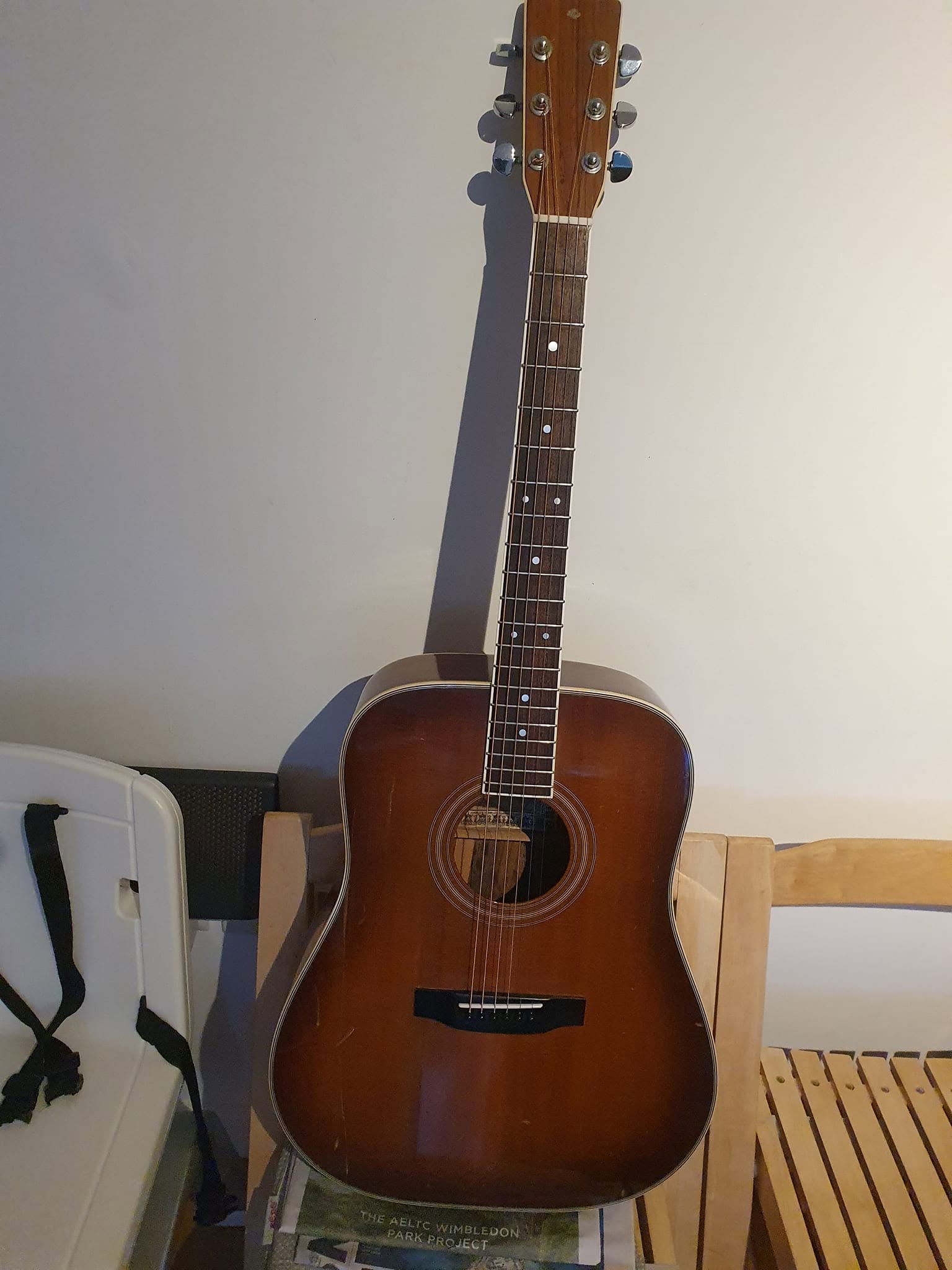
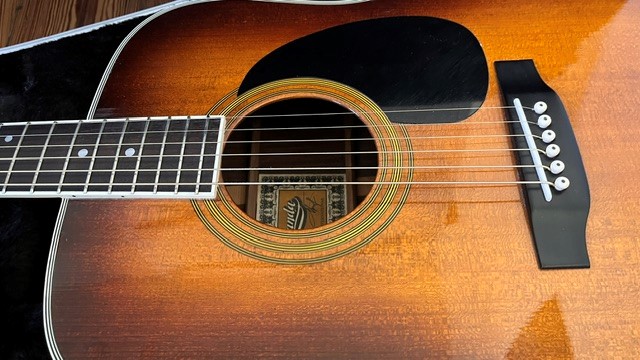
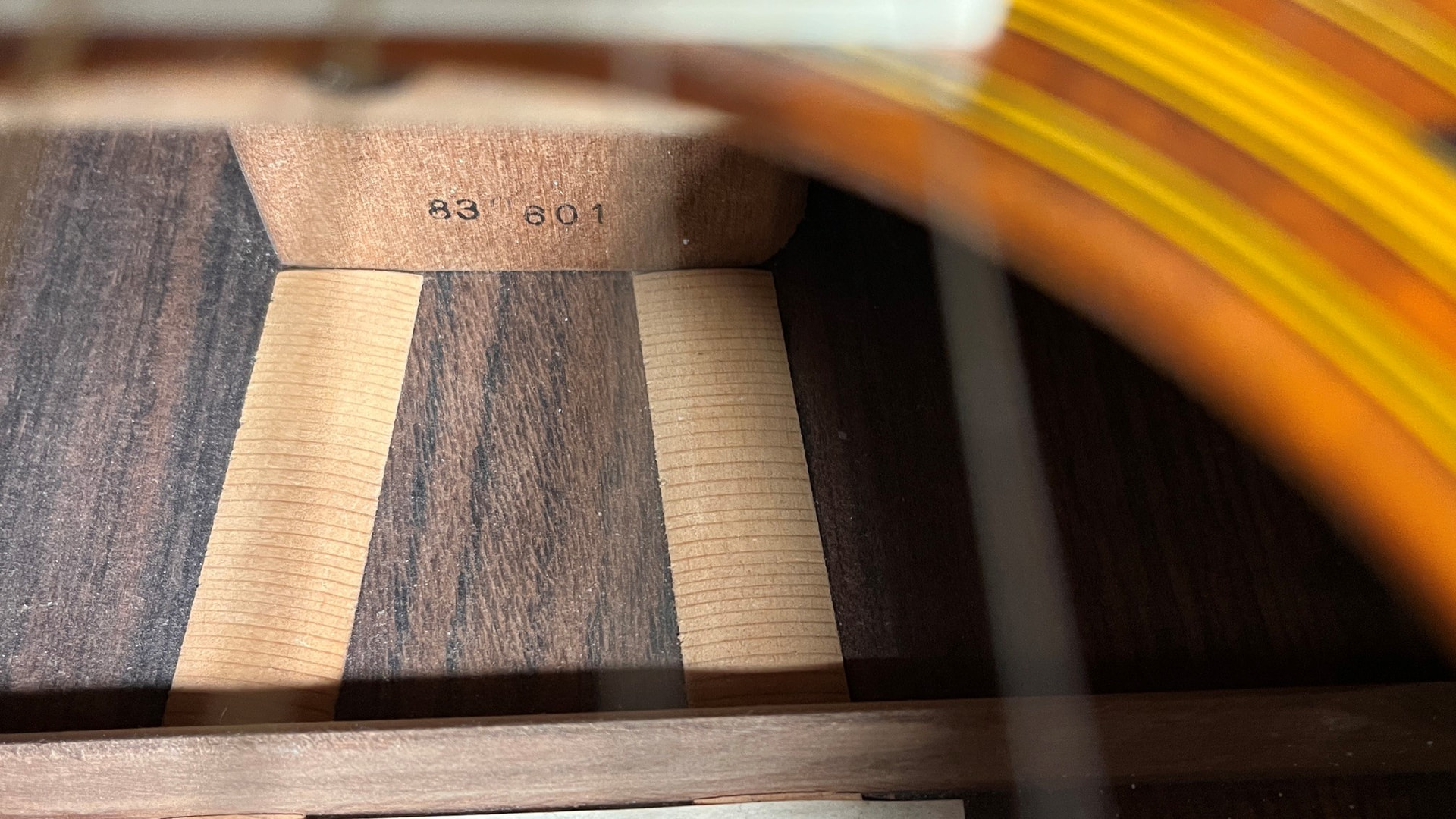
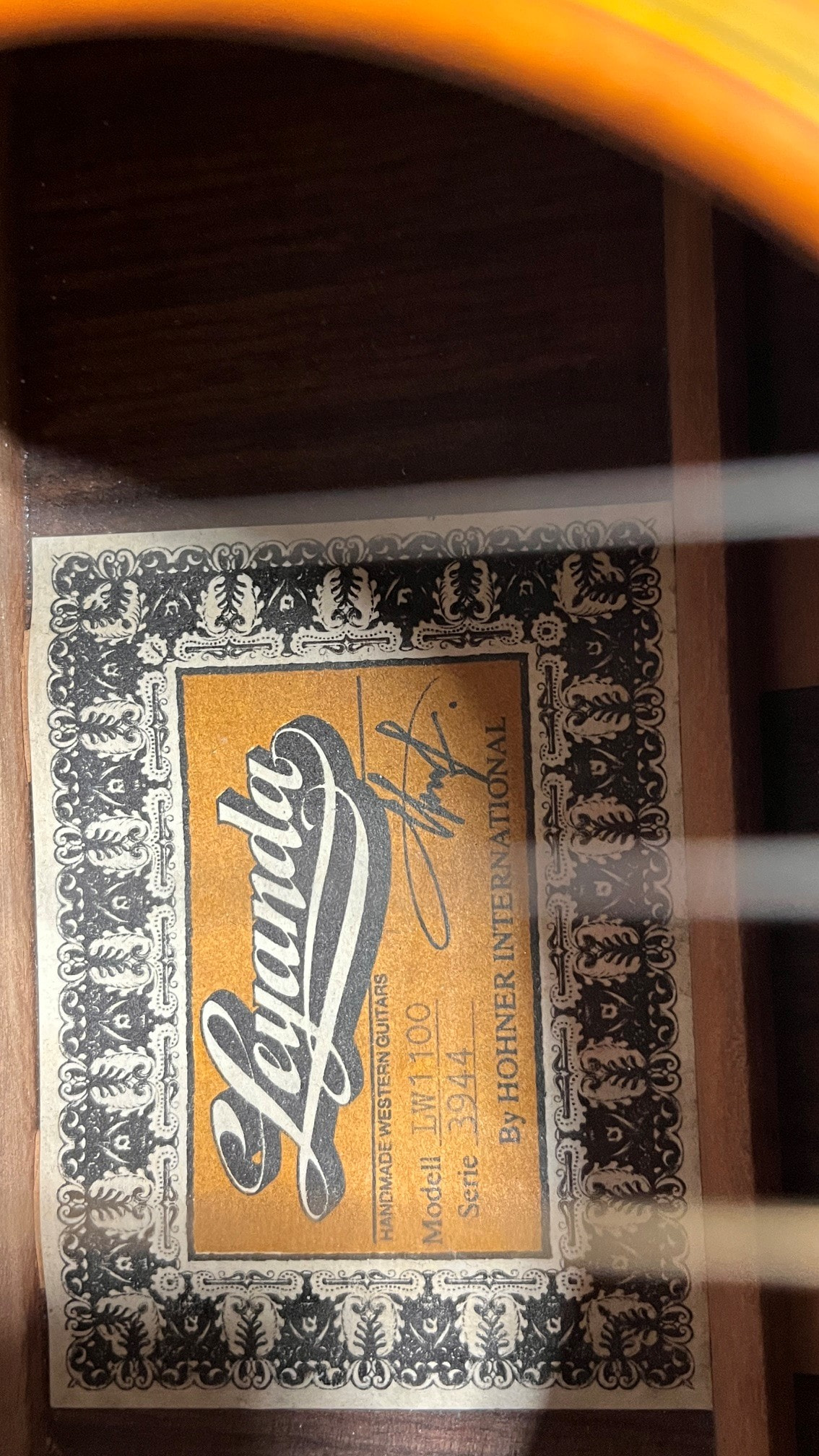
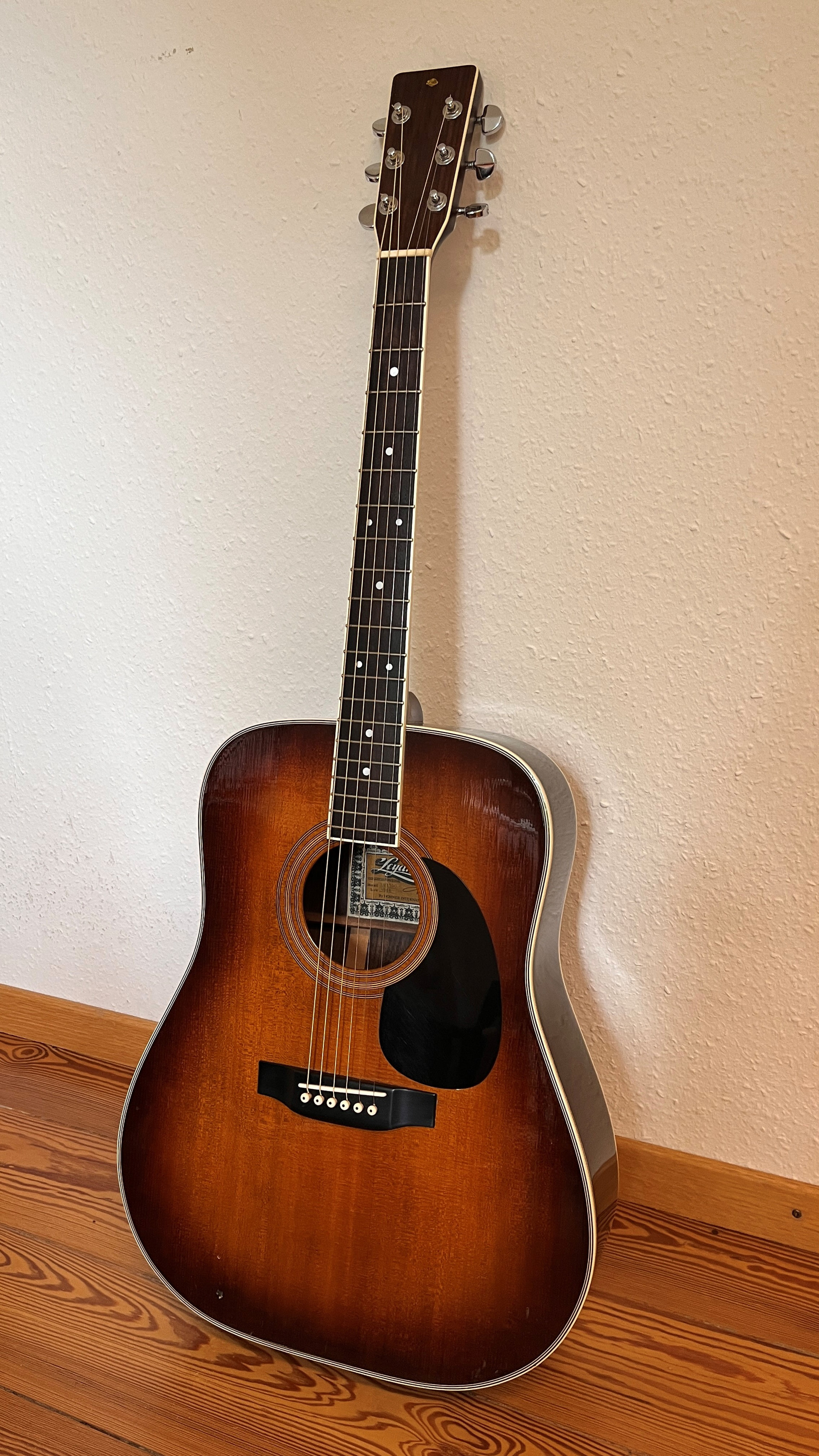
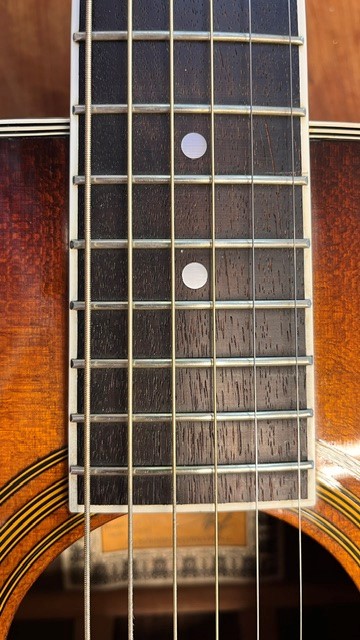
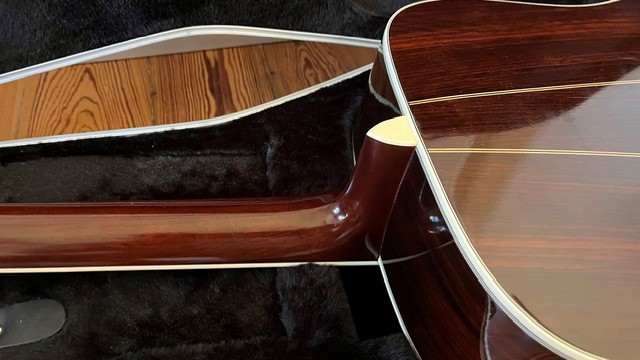
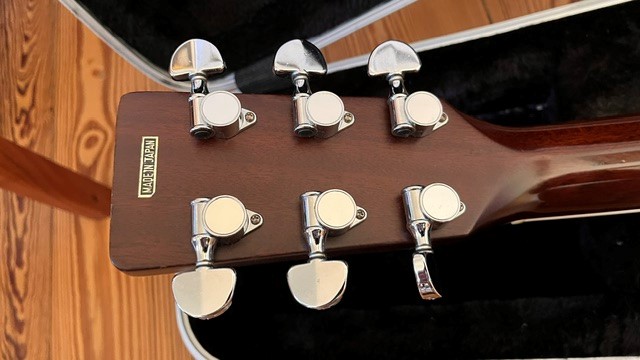
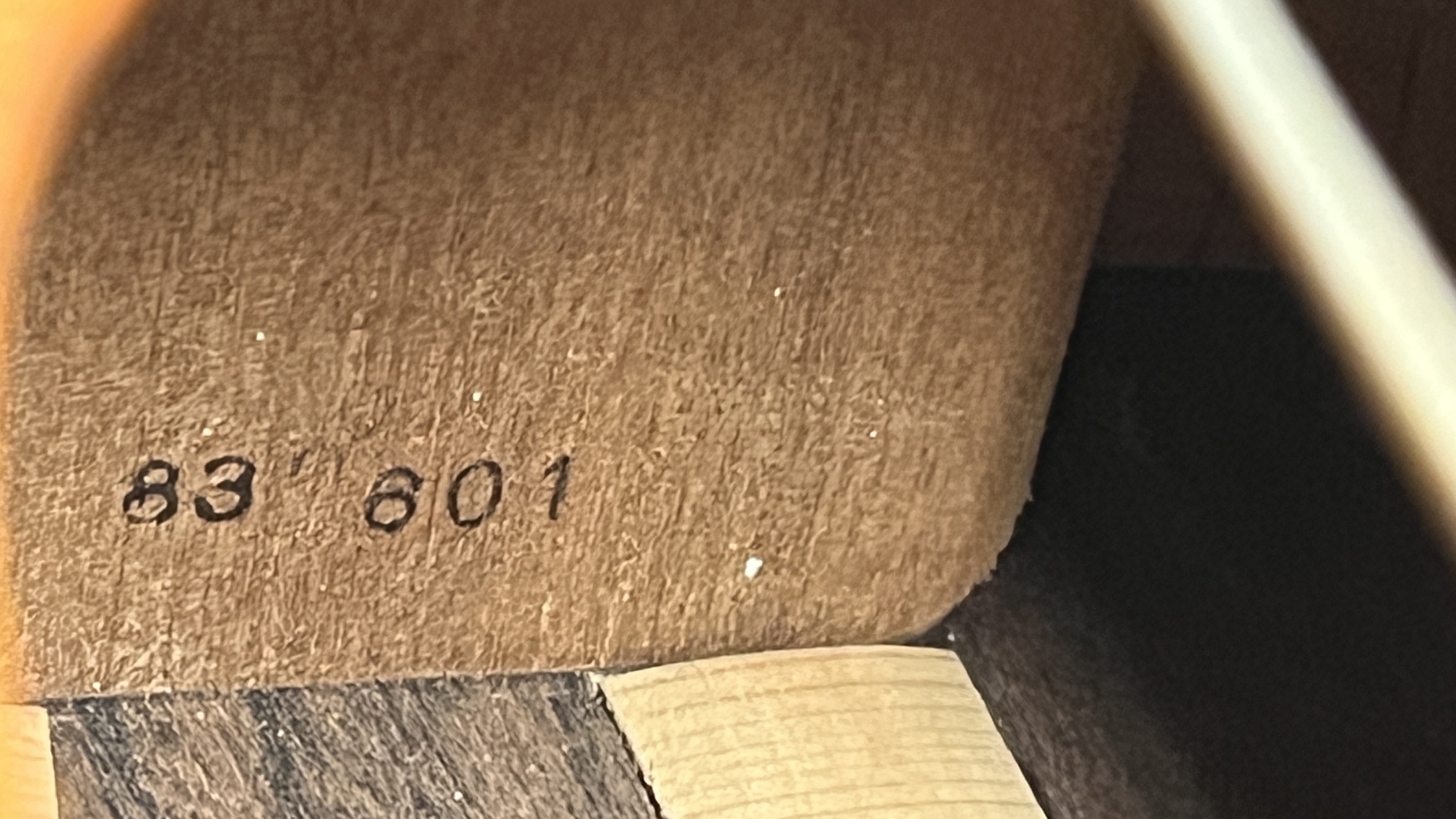
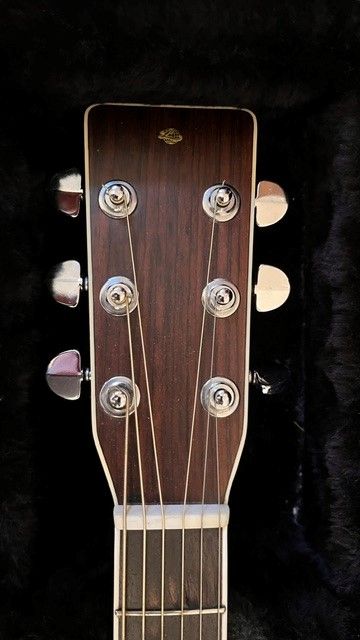
Ich besitze eine Leyanda LW1100 Made in Japan (1980/1981/82). Sie besitzt eine massive Fichtendecke, dreiteiligen Boden, den Innenstempel ‘83 801’ und sieht nahezu identisch mit einer Morris W-50 aus. Ist jemand bekannt, ob Moridaira oder Terada diese Gitarren als OEM für Hohner gebaut haben?
That sounds plausible. The neck block number is 830601, there’s a ghost 0 just visible and the other Japanese Leyandas have the same format numbers. It’s an unusual colour, kind of a violin burst.
**Hello philw, thank you to your sharp eye, you have given me a new insight. The numbers could really mean: 83(0)601 - It could stand for 1983 June - 01 first guitar. This would probably rather suggest Morideira - Morris W 50…
[quote=“philw, post:12, topic:5272, full:true”]
It could be a date. 1983 is about the right time and the other Japanese Leyandas I know of have the stamps 830629 and 830818.
Hello everyone,
I have been researching my Hohner Leyanda LW1100 for quite some time.
Unfortunately Hohner has no production records anymore, and Moridaira also confirmed they have no serial number records from that period.
My neck block is stamped 830601 (the “0” is only lightly stamped, almost invisible).
Other Japanese Leyandas known in this forum carry stamps 830629 and 830818, so the date interpretation seems plausible.
Instead of discussing Morris vs. Kiso Suzuki, I would like to ask something more objective:
Are there construction details that clearly point to one factory?
For example:
neck block shape
kerfing style
bridge plate
X-bracing layout
brace shaping
headstock construction
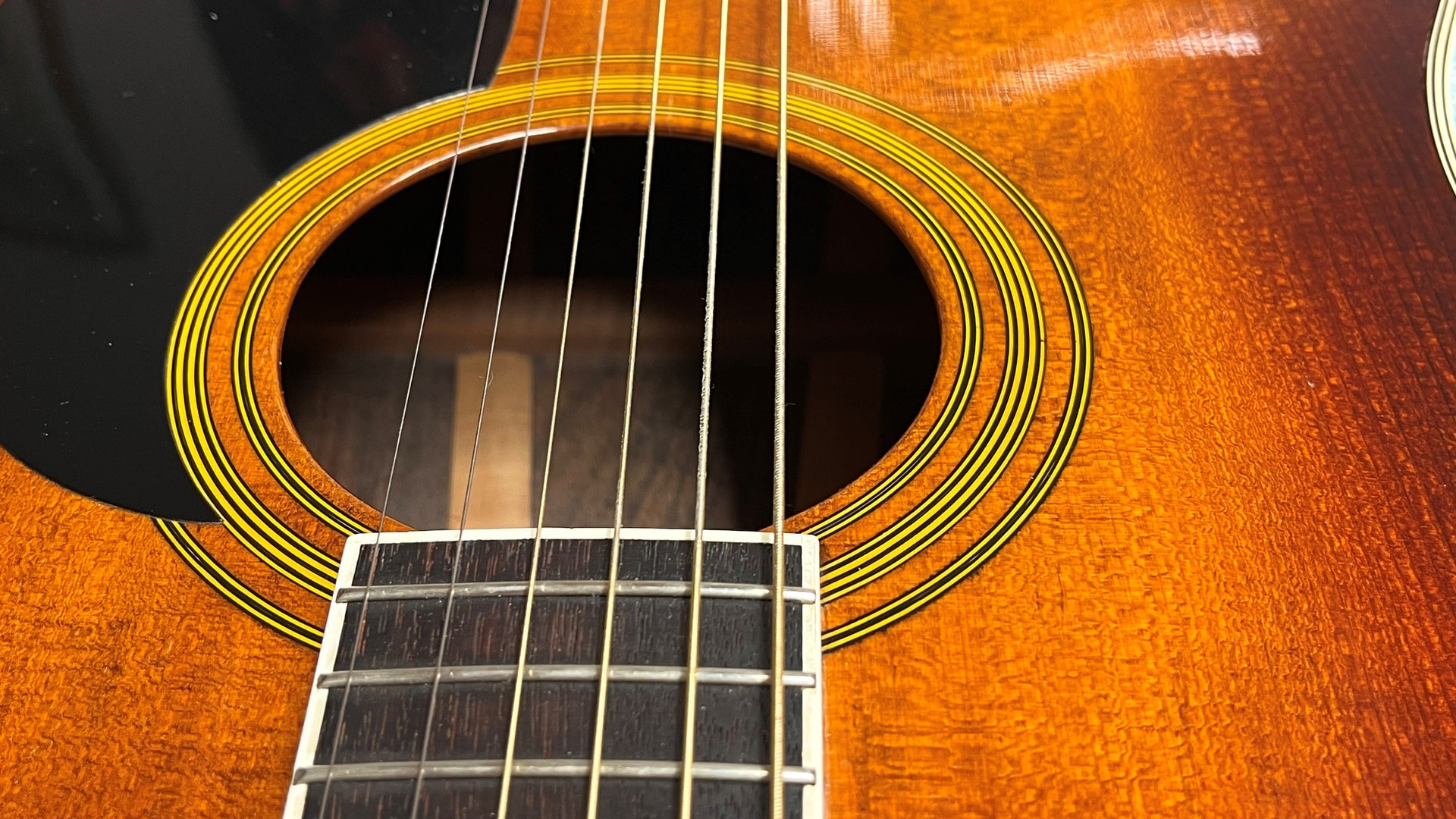
rosette pattern
fretboard material
neck joint
truss rod type
I can provide detailed photos of all internal construction if that helps.
I would really appreciate opinions based on construction details rather than general similarities.
I think your question is probably best directed to a forum with a wider knowledge of Japanese production. If you use Facebook, I recommend “Old Japanese Guitars. All models welcome” which has some very knowledgeable users.
1983 is an interesting year because the relationship with Moridaira, who had managed Hohner Japanese production since the mid 1970s, was coming to an end. If it was a couple of years earlier, there’s a high probability that a Japanese Hohner acoustic was made by Terada and if not then probably by S Yairi as those were the regular Moridaira subcontractors. By 1983 it’s unclear whether Hohner still had a relationship with Moridaira and whether Moridaira still had a relationship with Terada.
The Japanese Leyandas are an oddity anyway. Most of the Leyanda LW models were made later in the 80s in Korea and it’s only become apparent recently (to me, at least) that there’s a small window when some very interesting Leyanda LW models were made in Japan. So it’s possible that Hohner contracted directly with a Japanese factory and Moridaira (or their subcontractors) weren’t involved at all.
Thank you very much for your thoughtful and informative reply.
I really appreciate you taking the time to explain the historical background of Hohner’s Japanese production. Your comments about 1983 being a transition period between Moridaira and other possible manufacturers make a lot of sense.
I also appreciate your suggestion to ask in the Facebook group “Old Japanese Guitars. All models welcome”. I will post my guitar there and see whether someone recognizes the construction details.
During my research I have now contacted both Hohner Germany and Moridaira. Unfortunately neither company could identify the instrument, and Moridaira told me they no longer have production records from that period.
If I eventually discover the manufacturer, I’ll let you know. It might help to document this rather unusual Japanese Leyanda series.
I am trying to identify the original manufacturer (OEM) of this Hohner Leyanda LW-1100, made in Japan in 1983.
So far, neither Hohner Germany nor Moridaira (Morris) could identify the factory from their remaining records.
The guitar has:
Made in Japan
Handmade Western Guitar label
neck block stamp: 83 601
solid spruce top
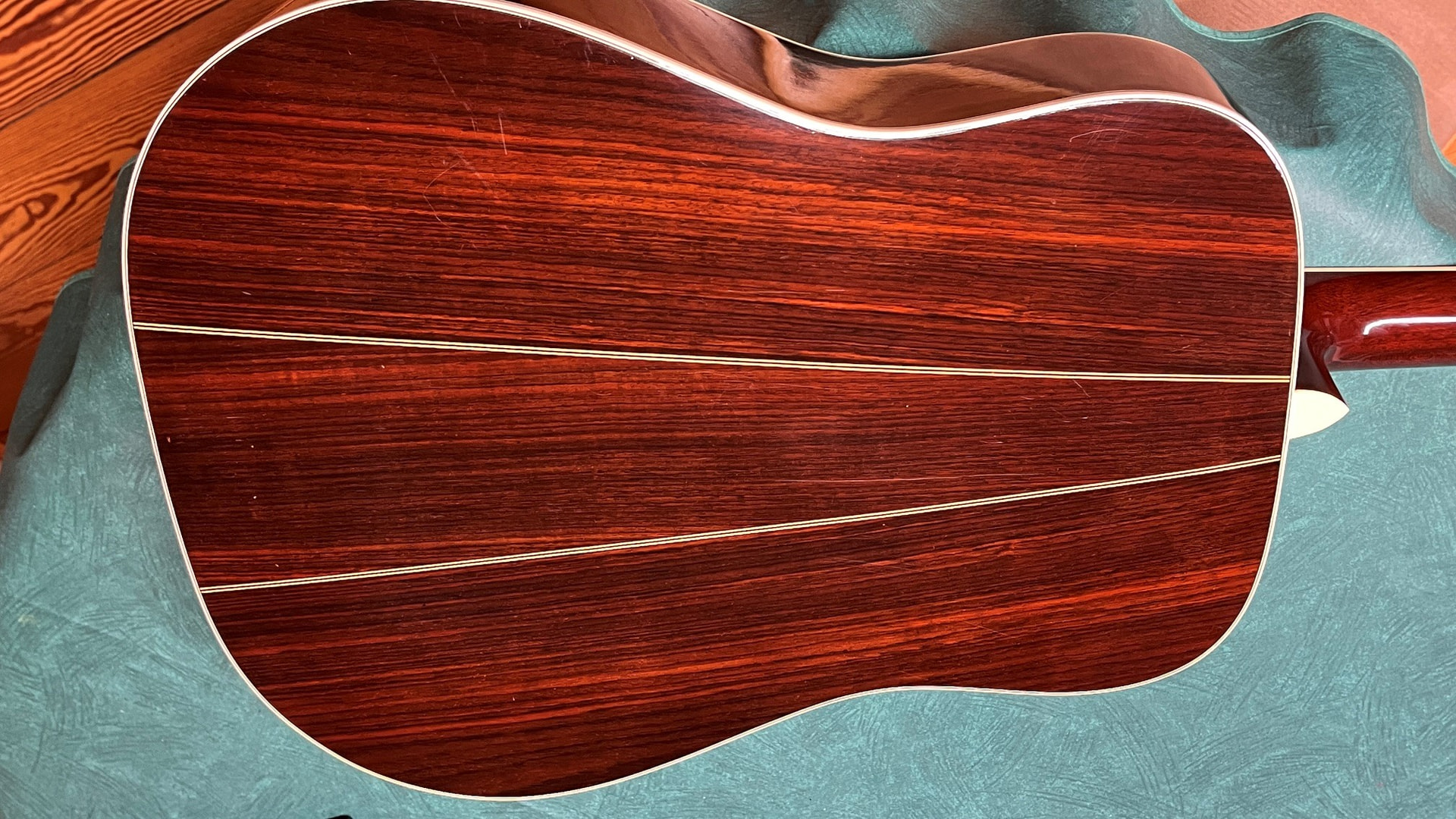
three-piece rosewood back (Martin D-35 style)
rosewood fingerboard
44.2 mm nut width
serial number 3944
I am not looking for guesses based on the label. Instead, I would like to know whether the construction details (headstock, rosette, bridge plate, neck block, bracing, heel, etc.) remind you of a particular Japanese factory such as Kiso Suzuki, Terada, Yamaki, Kasuga, S. Yairi, or another OEM.
Any opinions or comparable instruments would be greatly appreciated.
Dear Phil,
Based purely on the construction details (rosette, bridge plate, neck block, headstock and bracing), is there any Japanese factory that your experience tells you this guitar resembles more than others? I’m not looking for certainty—just your personal impression.
Jörg
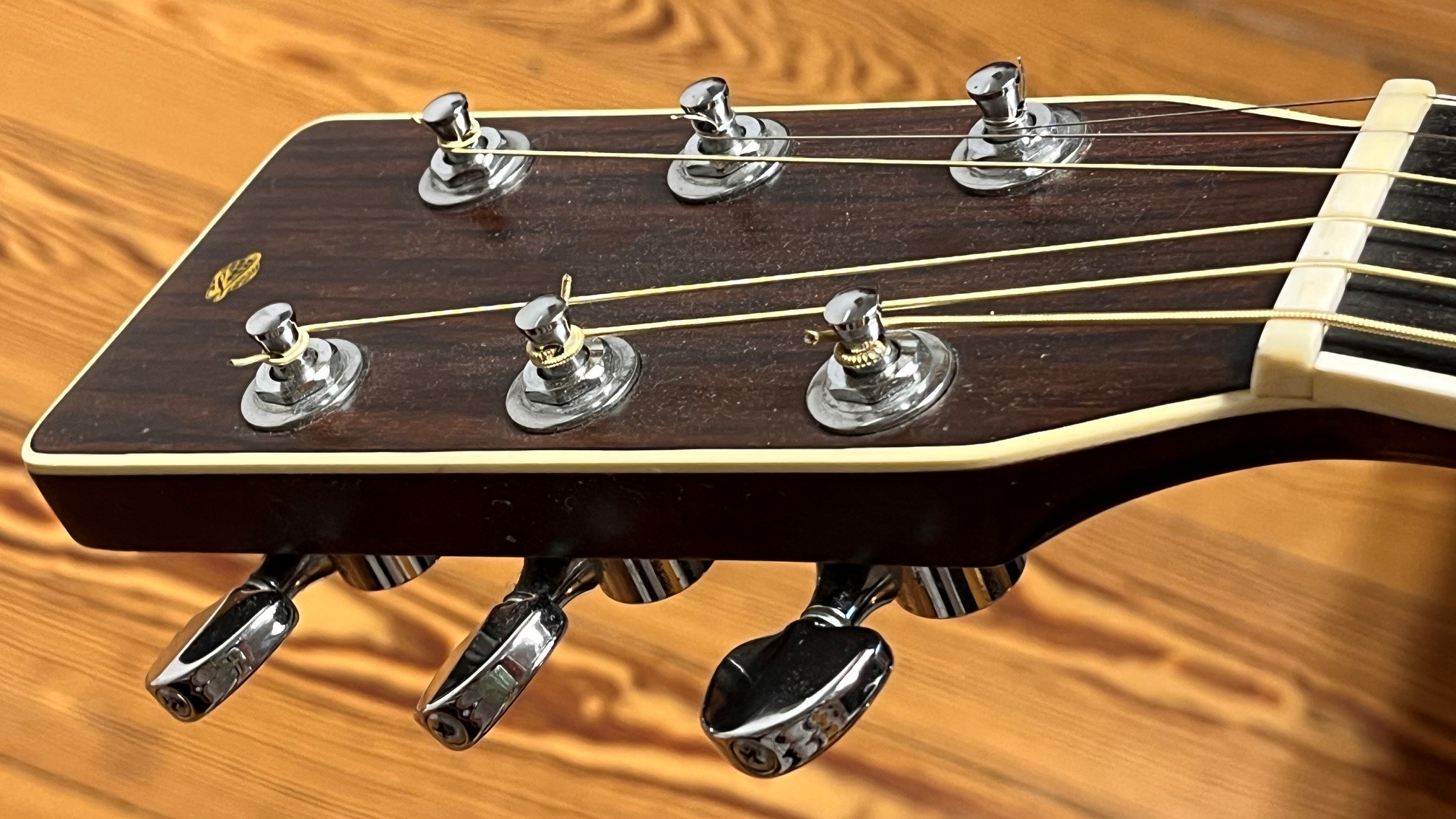
A lot of design and construction elements are copied so tend to be shared between factories. And often the components are similar because the factories have common suppliers. But I do think Suzuki is a possibility. The other factory that comes to mind is Yamaki/Daion based on the bound, veneered (rosewood?) headstock and the unusual colour. Yamaki did make darker, violin shade guitars but I can’t remember seeing one bursted.
Your point that many design and construction details were shared between Japanese factories because they copied successful designs and often used the same suppliers makes perfect sense.
Since your last reply, I have been comparing my Leyanda with several early-1980s Yamaki models, especially the YW-50, F-185 and AY-341S. They seem to share some interesting features, such as the three-piece back, the bound rosewood headstock and the overall style of construction.
Of course, I realise that these similarities alone do not prove a common manufacturer.
My question is this:
When you mentioned Yamaki/Daion, was that mainly because of the bound veneered headstock and the unusual finish, or do you also see other construction details that remind you of Yamaki?
Conversely, are there any specific construction features on my guitar that make you think of Kiso Suzuki rather than Yamaki?
I know there may never be a definitive answer, but I would be very interested in your personal impression based on your experience with Japanese guitars.